Linking Behavioral Data Patterns to Customized Incentive Designs Across Secure Virtual Casino Platforms
Written by Elena Richter · Jul 20, 2026

Linking Behavioral Data Patterns to Customized Incentive Designs Across Secure Virtual Casino Platforms
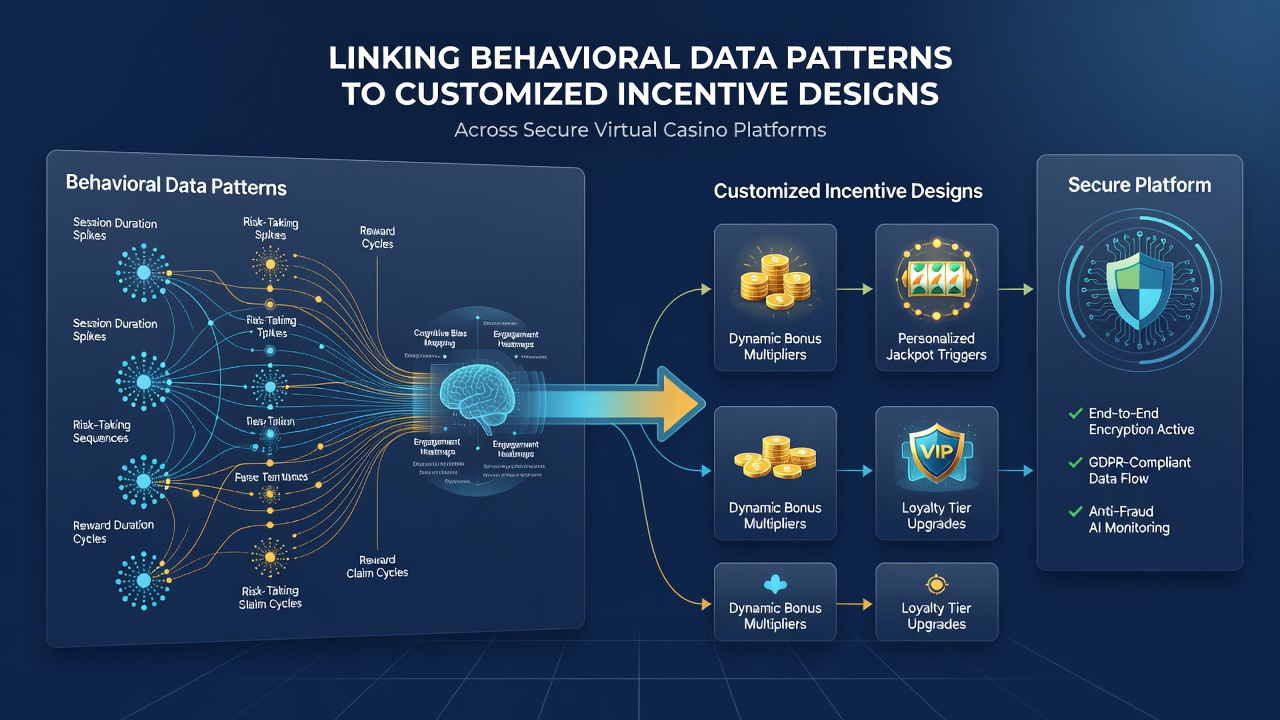
Virtual casino platforms collect extensive behavioral data from player sessions including session duration, bet sizing sequences, game category preferences, and response patterns to previous promotions, then apply analytical models to generate tailored incentive structures that align with observed activity profiles. These systems process information in real time while maintaining encryption protocols and access controls that meet regulatory standards across multiple jurisdictions.
Behavioral Data Collection and Pattern Identification
Platforms track metrics such as frequency of deposits, average wager amounts per game type, and volatility tolerance indicated by choices between high-variance slots and lower-risk table games, and they organize this information into segmented clusters that reveal consistent habits. Researchers at institutions studying digital gaming have documented how these clusters form around repeated actions like rapid successive bets or extended play on progressive jackpot titles, allowing systems to predict future engagement levels with measurable accuracy.
Analysts note that time-of-day activity and device usage patterns further refine these groupings, since mobile users often exhibit shorter but more frequent sessions compared with desktop players who tend toward longer continuous play. Data from secure virtual environments shows that cross-referencing these variables produces profiles capable of identifying high-value segments and at-risk patterns without exposing individual identities through anonymized aggregation techniques.
Designing Customized Incentives Based on Observed Patterns
Once patterns emerge, platforms map them directly to incentive parameters such as bonus percentages scaled to recent deposit behavior or free spin allocations tied to specific game categories that a player has engaged with repeatedly. Systems adjust reward triggers dynamically, for instance offering cashback on net losses after a streak of high-volatility play while routing lower-variance users toward reload bonuses that match their steadier deposit rhythms.
One documented approach involves linking play duration data to tiered loyalty multipliers, where extended sessions on live dealer tables generate escalating rewards that differ from those provided to users whose activity centers on quick-spin slots. This matching process relies on algorithms that weigh historical response rates to similar offers, ensuring the resulting incentives reflect demonstrated preferences rather than generic promotions distributed across all accounts.
Security Protocols Protecting Data and Incentive Delivery
Secure virtual casino platforms integrate behavioral analytics within encrypted environments that use end-to-end data protection and multi-factor authentication for both player accounts and backend analytics access. Regulatory frameworks in regions including Malta and parts of Australia require regular audits of these systems to verify that personalized incentives do not compromise transaction integrity or expose sensitive behavioral records.
Tokenization of player identifiers adn segmented data storage prevent direct linkage between raw activity logs and reward fulfillment processes, while real-time monitoring flags anomalies that could indicate unauthorized access attempts. As of July 2026, several major platforms reported expanded use of distributed ledger elements to log incentive issuance events, creating immutable records that support compliance verification without increasing latency in reward delivery.
Integration Challenges and Platform Adaptations
Connecting behavioral insights to incentive systems requires synchronization across multiple data streams, including payment verification timelines and game outcome volatility indexes, which platforms address through modular architecture that isolates analytics engines from transaction processors. Observers note that this separation reduces single-point vulnerabilities while permitting rapid updates to customization rules based on fresh pattern data.
Industry reports from the European Gaming and Betting Association highlight how platforms test these linkages through controlled rollouts that measure uplift in session metrics against baseline periods, confirming that pattern-matched incentives produce higher retention signals than uniform bonus structures. European Gaming and Betting Association reports further detail regional variations in implementation, with North American operators often emphasizing responsible gaming thresholds within the same analytical frameworks.
Conclusion
Linking behavioral data patterns to customized incentives on secure virtual casino platforms continues to evolve through refined analytics and strengthened security measures that support precise reward delivery while satisfying regulatory requirements. Platforms that maintain these connections demonstrate measurable alignment between observed player activity and incentive outcomes across diverse market environments.