Patterns in Support Interaction Logs and Their Ties to Payment Option Performance in Digital Slot Environments
Written by Wendy Coleman · Jul 6, 2026
Patterns in Support Interaction Logs and Their Ties to Payment Option Performance in Digital Slot Environments
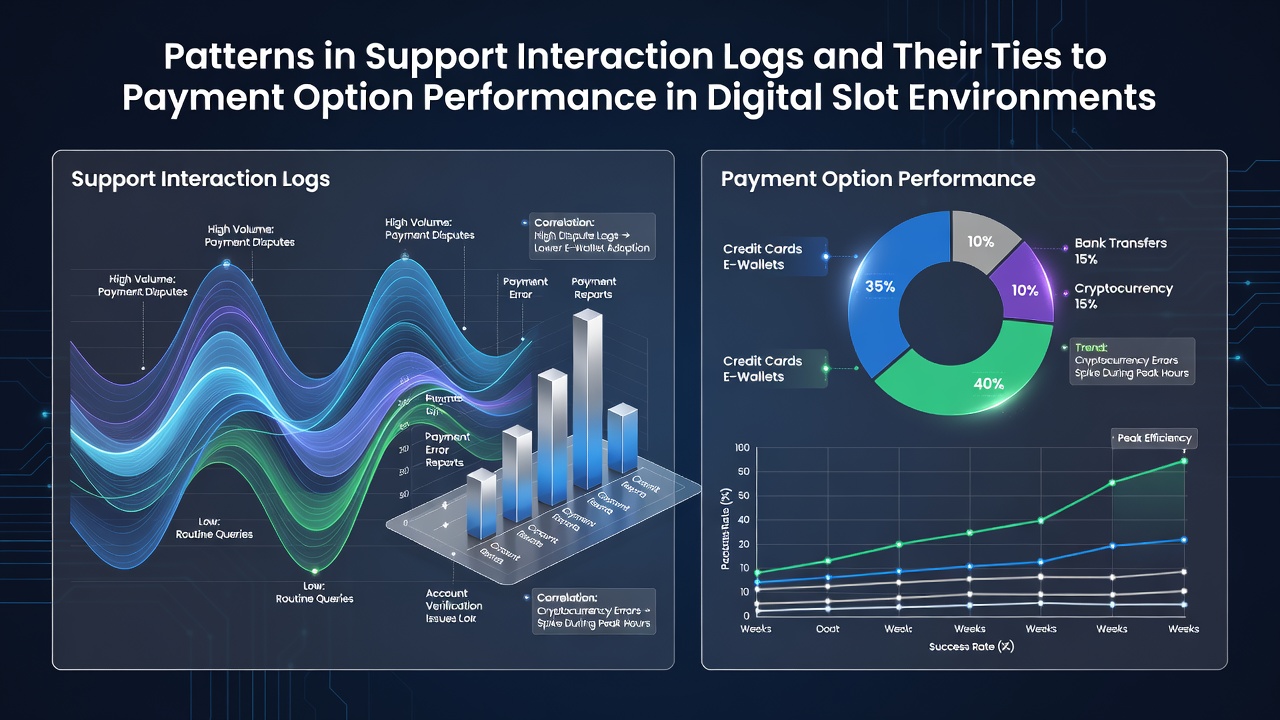
Support interaction logs in digital slot environments capture detailed records of player inquiries, transaction issues, and resolution paths, and these records frequently align with measurable differences in how payment options complete deposits and withdrawals. Observers note that platforms processing high volumes of reel-based gameplay generate logs rich in timestamps, error codes, and agent notes, while payment performance data tracks approval rates, processing intervals, and reversal frequencies across methods such as e-wallets, bank transfers, and card networks.
Core Elements of Support Logs in Slot Platforms
Digital slot operators maintain logs that categorize contacts by type, including failed deposit attempts, verification delays, and payout disputes, and these categories often cluster around specific payment rails. Research indicates that logs referencing e-wallet services show shorter average resolution times compared with those tied to traditional bank wires, yet the same logs frequently record higher volumes of follow-up contacts when initial verifications stall. Data from multiple jurisdictions demonstrates that patterns emerge when logs are cross-referenced with transaction success metrics, revealing that certain error sequences precede payment declines at predictable rates.
July 2026 figures from several North American networks illustrate this linkage, as support volume spiked during periods of elevated slot activity while payment completion percentages remained stable for instant options and declined for those requiring manual review. Analysts have mapped these spikes to recurring phrases in agent notes, such as repeated mentions of "KYC hold" or "provider timeout," which correlate with measurable drops in same-day payout approvals.
Payment Options and Recorded Performance Indicators
Payment performance in digital slot settings rests on indicators like authorization success, settlement speed, and chargeback incidence, and logs document how players interact with each stage. E-wallet transactions typically generate fewer escalation entries than card-based flows, according to aggregated industry datasets, while bank transfer logs contain extended threads that track multi-day verification cycles. Studies compiled by research institutions show that platforms using automated verification tools reduce log entries related to payment friction by noticeable margins, although residual manual reviews still produce distinct clusters of repeated contacts.
Those who have examined cross-platform datasets find that performance gaps widen during peak hours, when support queues lengthen and certain payment providers experience temporary latency. Logs from these intervals reveal higher densities of status-update requests, and the same intervals coincide with measurable dips in completion rates for slower-settling methods. External reporting from the American Gaming Association tracks these variances across regulated markets without attributing outcomes to any single variable.
Observable Patterns Connecting Logs to Payment Outcomes
Pattern detection begins with frequency analysis of log keywords against payment outcome codes, and recurring combinations appear consistently across datasets. One pattern involves clusters of "verification pending" entries that precede extended settlement windows for particular processors, while another centers on repeated "funds not credited" notations that align with lower approval percentages for regional card issuers. Researchers have observed that these patterns intensify when slot volatility indexes rise, as players attempt more frequent smaller transactions that trigger additional compliance checks.
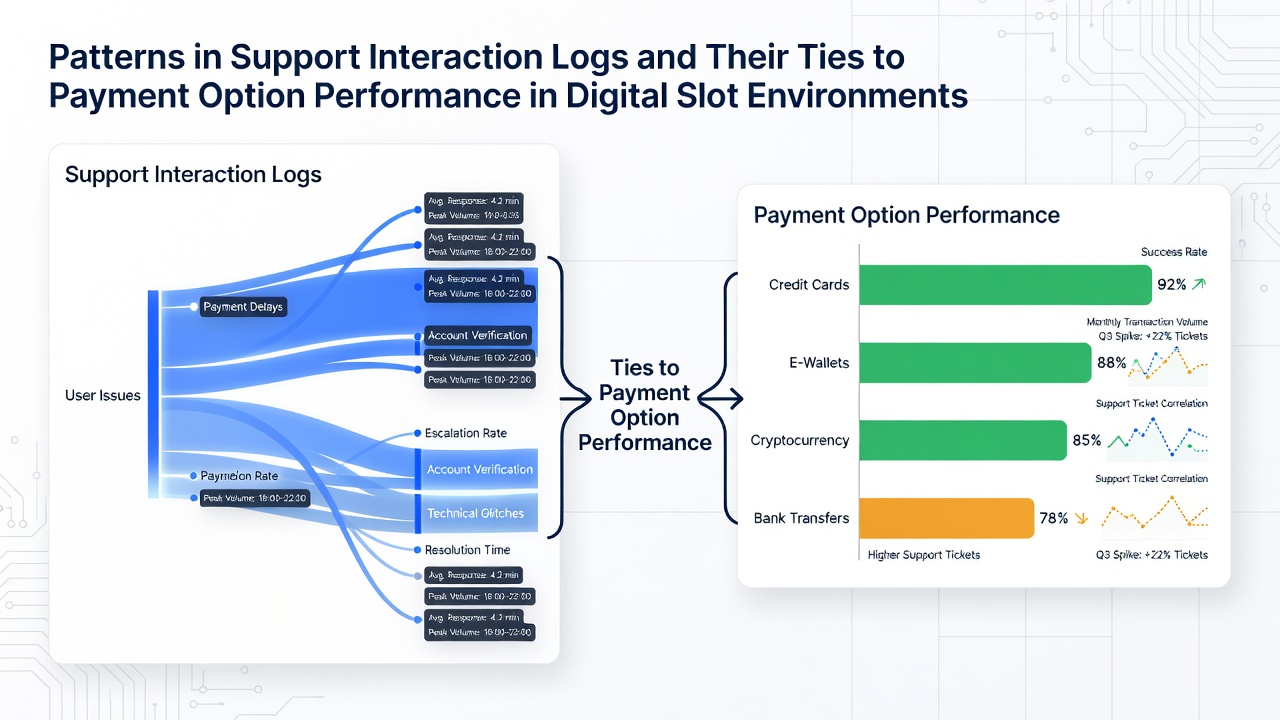
Canadian regulatory summaries released through iGaming Ontario highlight similar alignments in provincial markets, where log timestamps match payment reversal events at rates that exceed random expectation. The same summaries note that platforms incorporating real-time status feeds into player dashboards reduce the volume of follow-up tickets without altering underlying payment rails. Observers tracking July 2026 activity report that these reductions appear most pronounced for e-wallet flows, where automated confirmations cut manual interventions by measurable percentages.
Data Sources and Analytical Approaches
Analysts rely on anonymized log exports merged with transaction ledgers to quantify relationships, and statistical models isolate variables such as time-of-day, payment provider, and verification stage. Reports issued by the Responsible Gambling Council of Canada emphasize the value of longitudinal tracking, which captures how patterns evolve as platforms update compliance protocols. European datasets maintained by trade associations supply comparative benchmarks that place North American observations within broader international contexts, confirming that certain log sequences predict payment delays across regulatory environments.
Additional modeling incorporates player segmentation, separating high-frequency users from occasional participants, and these segments produce distinct log signatures that map to different success distributions. The resulting matrices allow operators to forecast support load based on scheduled payment method availability and to adjust staffing accordingly during anticipated peak periods.
Conclusion
Support interaction logs in digital slot environments function as detailed indicators of payment option performance when examined through structured correlation methods. Aggregated records demonstrate repeatable associations between specific log patterns and transaction outcomes across multiple payment types and time frames. Continued collection of timestamped data through 2026 and beyond supplies the raw material for refined models that link player contact sequences with settlement metrics, offering operators clearer visibility into operational interdependencies without reliance on anecdotal interpretation.