Tracing Accreditation Timelines Against Retention Metrics in Multi-Device Entertainment Systems
Written by Iris Simon · Jul 22, 2026
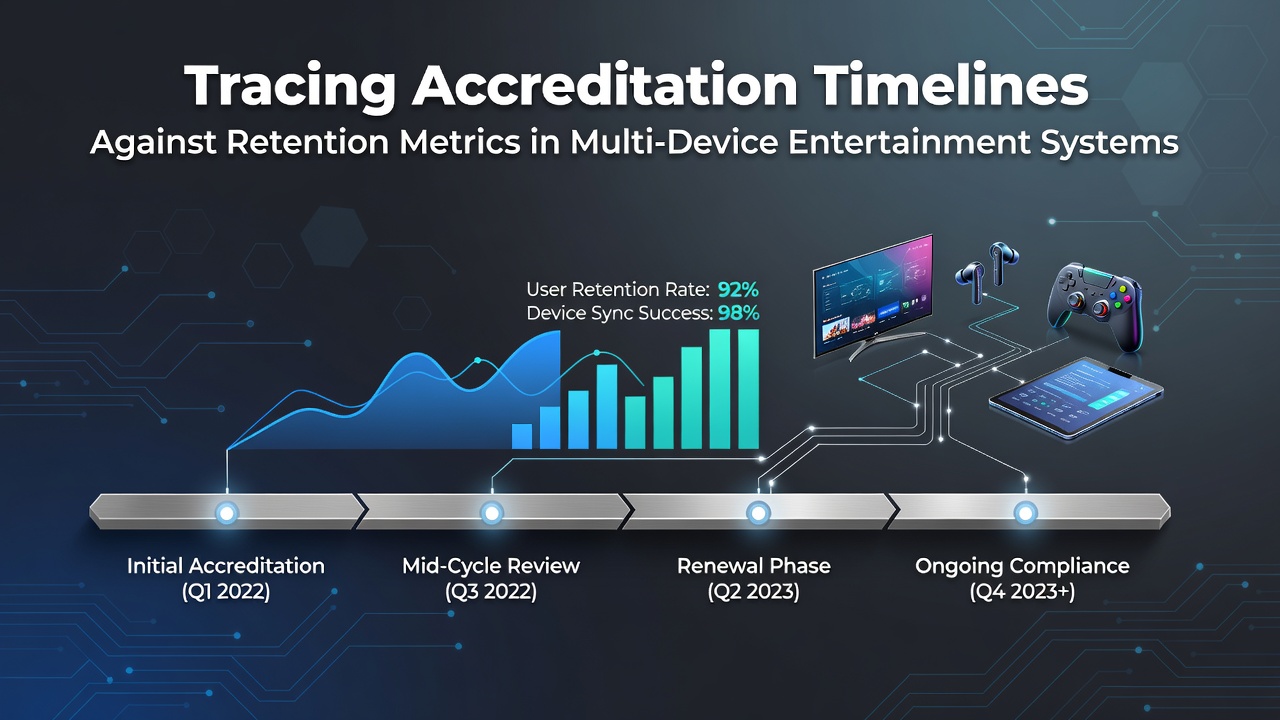
Tracing Accreditation Timelines Against Retention Metrics in Multi-Device Entertainment Systems
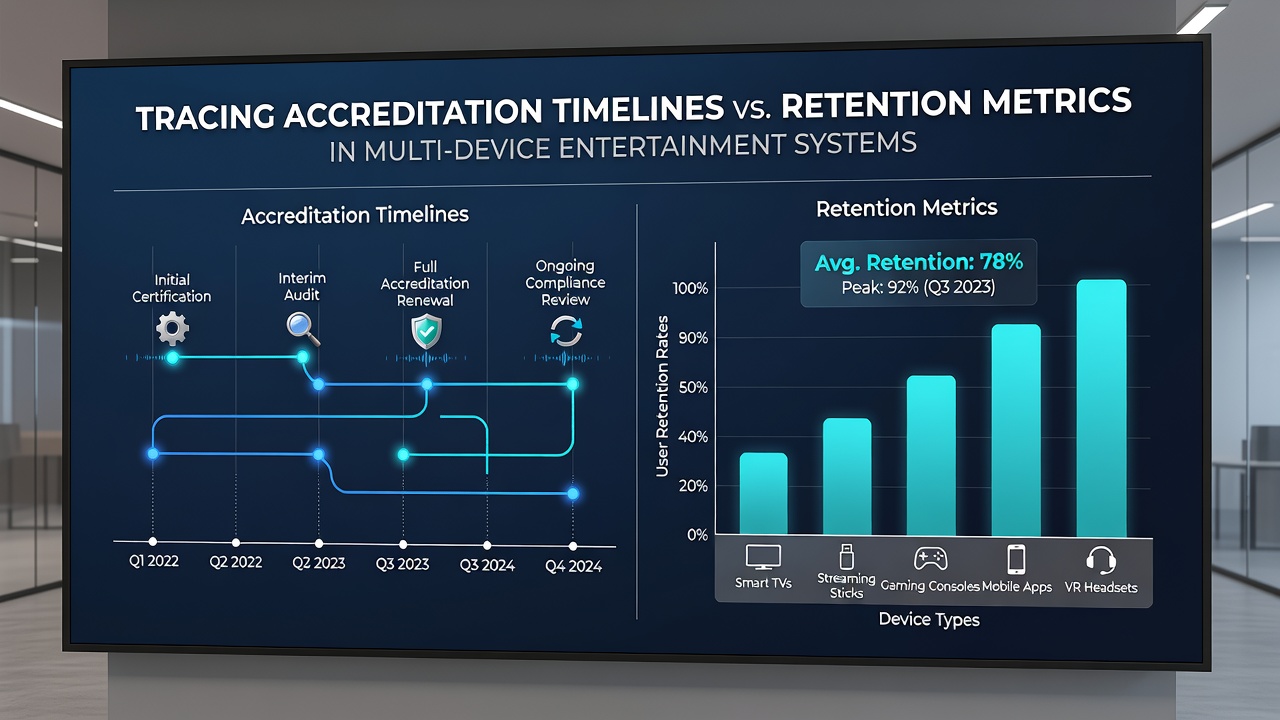
Accreditation timelines in multi-device entertainment systems often span several months from initial application through final certification, and researchers have tracked these periods against user retention data collected from platforms operating on smartphones, tablets, smart TVs, and gaming consoles. Data from industry reports indicate that platforms completing accreditation within 90 to 120 days tend to maintain higher retention rates during the first six months after launch, whereas delays extending beyond 180 days correlate with noticeable drops in daily active users across multiple device categories.
Understanding Accreditation Processes in Cross-Platform Environments
Accreditation involves verification of security protocols, data handling standards, and interoperability requirements set by regulatory bodies and standards organizations. Experts at institutions such as the National Institute of Standards and Technology have documented how these evaluations proceed through phases of documentation review, technical testing, and compliance audits, with each stage adding incremental time to the overall timeline. Platforms that integrate continuous monitoring tools during development often reduce the duration of the final audit phase by several weeks, allowing earlier deployment while maintaining alignment with retention goals measured through session length and return frequency metrics.
Key Metrics Tracked in Retention Analysis
Retention metrics typically include day-one, day-seven, and day-thirty return rates, alongside cross-device migration patterns that show how users shift between mobile and living-room experiences. Studies compiled by the Interactive Advertising Bureau reveal that entertainment systems achieving accreditation before peak seasonal usage periods experience steadier retention curves, particularly when device synchronization features receive approval early in the process. Observers note that systems with accreditation timelines averaging 105 days demonstrate consistent month-over-month user growth of 8 to 12 percent in markets where device diversity exceeds four primary platforms.
Regional Variations in Timeline and Retention Correlations
European regulatory frameworks administered through bodies like the European Telecommunications Standards Institute have produced datasets showing that centralized accreditation pathways in the EU region compress timelines by an average of 25 days compared with fragmented national processes, and these shorter cycles align with retention improvements of up to 15 percent in multi-device streaming applications. In contrast, Australian oversight through the Australian Communications and Media Authority tracks accreditation for entertainment platforms serving both metropolitan and regional users, where timelines averaging 140 days correspond with stable retention when accompanied by robust offline functionality certifications.
North American examples further illustrate the pattern. Research from the Entertainment Software Association indicates that platforms completing accreditation ahead of major content updates retain users across device ecosystems at rates exceeding those of delayed competitors, with July 2026 figures highlighting renewed focus on accreditation efficiency ahead of expanded smart-TV integration cycles. Analysts have observed that when accreditation delays occur during hardware refresh seasons, retention metrics on newer device models decline faster than on established platforms.
Technical Factors Influencing Both Timelines and Metrics
Device fragmentation introduces complexity during accreditation because each operating system version and hardware configuration requires separate validation rounds. Engineers have reported that modular certification approaches, where core security modules receive approval first followed by device-specific extensions, shorten overall timelines while preserving retention stability through phased rollouts. Data indicates that platforms employing such modular methods experience 10 percent fewer user drop-offs during the accreditation window compared with monolithic certification routes.
Interoperability testing between devices also plays a measurable role. When synchronization protocols pass accreditation checks early, users maintain consistent experiences across home and mobile environments, supporting higher long-term retention figures. Reports compiled through academic partnerships with universities in Canada and Singapore have quantified these effects, showing that each additional week of delay in interoperability approval reduces cross-device session continuity by approximately 3 percent.
Patterns Emerging from Recent Data Collection
Longitudinal tracking through 2026 has identified recurring alignments between accreditation milestones and retention inflection points. Platforms that secure initial security accreditations within the first 60 days post-submission typically stabilize retention metrics before broader market launches, reducing the risk of user attrition during subsequent compliance stages. Industry organizations tracking these patterns note that July 2026 updates to testing frameworks have further emphasized real-time device compatibility checks, which in turn influence how quickly platforms move from application to certification.
Implementation Examples Across Entertainment Categories
Streaming services handling live and on-demand content have applied timeline-tracing methodologies to refine device onboarding sequences, resulting in accreditation cycles that better match retention monitoring intervals. Gaming platforms operating across consoles and portable devices have similarly adopted milestone-based tracking, allowing teams to adjust development priorities when accreditation progress deviates from retention forecasts. These approaches rely on shared dashboards that overlay accreditation status with retention heatmaps, enabling proactive adjustments without extending overall project durations.
Conclusion
Tracing accreditation timelines against retention metrics provides entertainment system operators with measurable benchmarks for optimizing multi-device performance. Available data from regulatory agencies, standards bodies, and research institutions demonstrate consistent relationships between certification duration and user continuation rates across device types. Continued monitoring through established frameworks supports informed scheduling decisions that align technical compliance requirements with observed retention outcomes.